Why Pet Adoption Matters
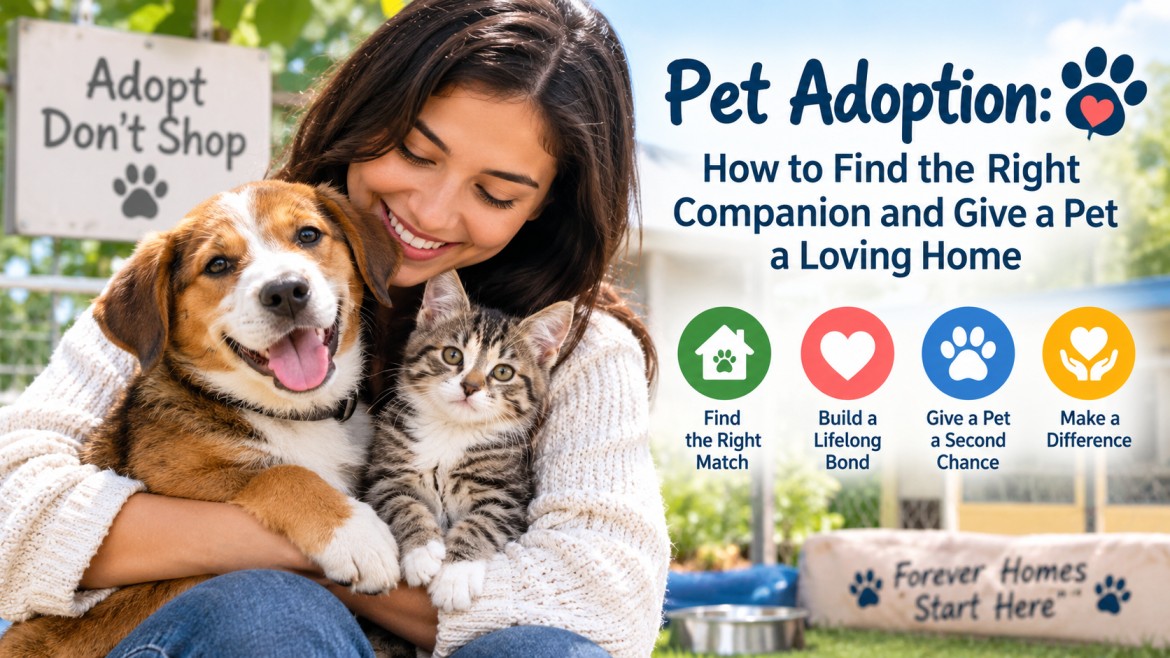
Many animals need new homes for different reasons. Some may come from shelters or rescue organizations, while others may need rehoming because their previous families can no longer care for them. Adoption can provide these animals with stability, attention, and a loving home.
Adopting a pet is also a long-term commitment. Before bringing an animal home, potential owners should consider their available time, living space, budget, and ability to provide proper care.
Choose a Pet That Fits Your Lifestyle
Every animal has different needs. Dogs generally require exercise, training, social interaction, and regular outdoor activity. Cats may be more independent but still need playtime, enrichment, grooming, and veterinary care. Birds and smaller pets also require suitable housing, nutrition, cleanliness, and daily attention.
Think about your daily routine before choosing a pet. A good match can make the transition easier for both the animal and the family.
Prepare Your Home
Before adoption, prepare a comfortable and safe area for your new companion. Remove dangerous objects, secure electrical wires, and keep harmful foods or household chemicals out of reach.
Make sure you have essential supplies such as food and water bowls, appropriate food, bedding, toys, grooming items, and identification equipment.
Ask Questions Before Adoption
When adopting from an individual, shelter, or pet platform, ask important questions about the animal's age, behavior, vaccination history, diet, training, and previous living situation. Understanding the pet's background can help you prepare for its needs.
It is also important to meet the animal and observe its behavior whenever possible. A calm introduction can help determine whether the pet is a good fit for your household.
Give Your New Pet Time to Adjust
A newly adopted pet may feel nervous during the first few days or weeks. Give it patience and allow it to become familiar with its new surroundings gradually.
Maintain a consistent feeding and daily routine. Positive reinforcement, gentle interaction, and plenty of rest can help build trust.
Responsible Pet Ownership
Adoption is only the beginning. Responsible owners provide nutritious food, clean water, exercise, mental stimulation, grooming, training, and appropriate veterinary care. Pets also need companionship and attention.
Most importantly, remember that adopting an animal is a long-term responsibility. A pet should not be treated as a temporary purchase or gift that can easily be returned when circumstances change.
Conclusion
Pet adoption can create a wonderful relationship between an animal and its new family. By choosing carefully, preparing your home, asking the right questions, and providing lifelong care, you can give a pet a safe and loving environment.
Every pet deserves patience, kindness, and a forever home.